Panel fencing in Teesside
Lap panels sit at the bottom of that range, heavier featheredge and decorative tops at the top.
The default garden boundary
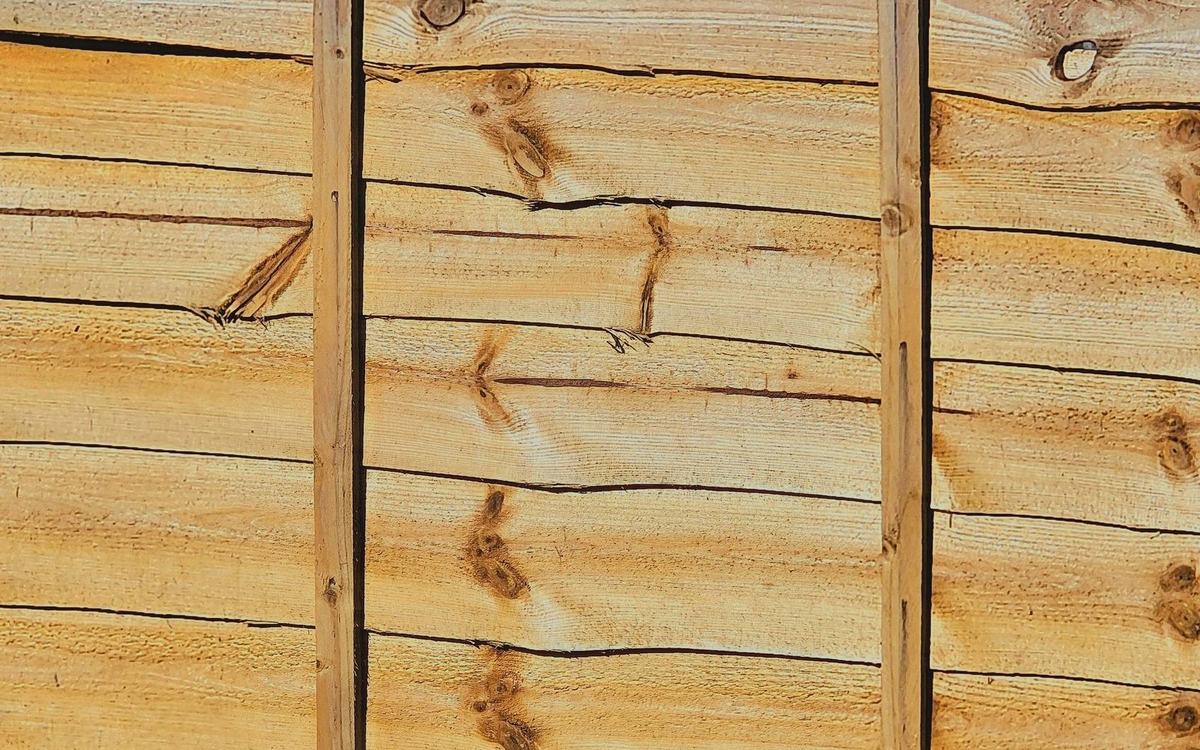
Most Teesside back gardens are fenced in 1.83 metre bays, and panel fencing is why: a fixed width, a fixed price, and a run that goes up in a day. Lap panels, the horizontal overlapping boards, are the budget end and suit sheltered plots. Featheredge and heavy duty panels weigh more, hold their shape better and stand up to the wind that whips across the open estates. Decorative tops, trellis, convex, wavy edge, add a little to the bay price and a lot to how the garden reads from the patio.
What the bay price covers
- The panel itself: pressure treated rather than dip coated, at the height agreed at quote stage rather than whatever the merchant had in stock.
- The post: timber or concrete, set in postcrete to a depth that suits the height, or slotted into concrete posts where you want the panel replaceable later.
- A gravel board: the sacrificial strip at the bottom that keeps timber out of the soil. Skipping it is the single most common false economy on a fence.
- Labour and clearance: old panels out, concrete lumps dug and removed, offcuts away, the ground left tidy.
What moves the price per bay
Height first: a 1.8 metre bay costs more than a 1.2 metre one in materials and in post depth. Panel grade next, since a heavy featheredge panel can be double the cost of thin lap. Then the posts, where concrete costs more up front and saves money the next time a panel breaks, because you slide a new one in rather than digging. Ground conditions add or subtract too. Clay holds the postcrete beautifully but digs hard, and a run along an old concrete path may need bolt down shoes instead of holes. Sloping gardens in Guisborough and Saltburn need stepping, which uses longer posts and more of them. The cost guide works through worked examples.
Where panels struggle
Exposed boundaries take a beating. On the fringes of Ingleby Barwick, Wynyard and the newer Yarm estates, a solid panel acts like a sail, and the failure point is almost always the post, not the panel. Hit and miss boards or a slotted top let wind through and survive longer, and closeboard built on site is the stronger option where a boundary keeps blowing down. Near the coast, salt shortens the life of thin galvanised fixings, so stainless or heavier gauge is worth asking about. The panel comparison guide lays the options out side by side.
Getting the measurements right
Count bays, not metres, when you are pricing panel work. Walk the boundary, count the existing posts, and note anything in the line: a manhole cover, a tree that has swallowed a post, a stretch where next door's wall does half the job. Send those details with the enquiry and the quote comes back accurate rather than provisional.